


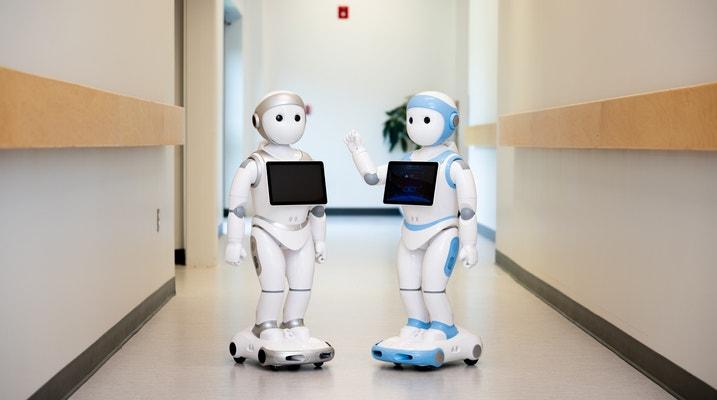
The remarkable and accelerating investment in the social robotics market is being propelled by a powerful combination of deep-seated societal needs and rapid technological advancements. A detailed analysis of the catalysts behind Social Robots Growth reveals why this once-futuristic concept is now attracting serious attention and capital from investors, healthcare providers, and technology companies. These are not short-term market dynamics but are structural drivers that are creating a powerful and enduring demand for robots that can provide assistance, education, and companionship. From the global demographic crisis of aging populations to the breakthroughs in conversational AI, these forces have created a fertile ground for the growth of a new industry aimed at addressing some of our most human needs with technology.
The single most powerful demographic driver for market growth is the global aging population. In many developed countries, the number of elderly people is growing rapidly, while the number of available human caregivers is shrinking. This is creating a massive and unsustainable "care gap." Social robots offer a potential solution to this crisis. A companion robot can help an older adult to live independently at home for longer by providing medication reminders, monitoring for falls, facilitating communication with family, and, crucially, by providing a source of daily social interaction to combat the pervasive and harmful effects of loneliness and social isolation. The sheer scale of the global elderly care challenge provides a massive and highly motivated market for social robotics solutions, making it the primary and most compelling use case for the industry.
Another major catalyst has been the massive and recent breakthroughs in the underlying artificial intelligence technologies, particularly in conversational AI. For a social robot to be useful and engaging, it must be able to hold a natural and intelligent conversation. The development of large language models (LLMs) has been a game-changer in this regard, making chatbot and voice assistant interactions far more human-like and capable than ever before. The Social Robots Market Is Projected To Grow a Valuation of USD 37.78 Billion By 2035, Growing at a CAGR of 16.79% During the Forecast Period 2025 - 2035. This rapid advancement in the "brain" of the robot is a key enabler, making it possible to create social robots that are not just mechanical puppets but are genuinely interesting, helpful, and believable conversational partners, which dramatically increases their value and appeal.
A third key driver is the growing need and demand for personalized and scalable solutions in education and healthcare. In education, a social robot can act as a tireless, one-on-one tutor for a child, adapting its teaching style to the child's individual learning pace. This is particularly effective for children with special needs, such as autism, where a robot's patient and predictable nature can be highly beneficial. In healthcare, a social robot can be used as a "coach" to help patients adhere to their treatment plans, or as a friendly companion to reduce anxiety for children in a hospital. The ability of a robot to provide consistent, personalized, and scalable support in these high-touch fields is a powerful value proposition that is driving significant research, pilot projects, and early adoption from these critical sectors.
Explore Our Latest Trending Reports:

 English
 Arabic
 French
 Spanish
 Deutsch
 Turkish
 Dutch
Dutch
 Italiano
 Russian
 Romaian
 Portuguese (Brazil)
 Tiếng Việt