


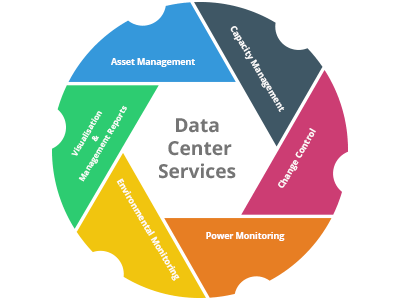
In the modern digital economy, where every business is a technology business, the infrastructure that powers it is of paramount importance. At the heart of this infrastructure is the data center, and the ecosystem of offerings that support it is known as the Data Center Service. This broad term encompasses the entire range of services related to the design, construction, operation, and management of data center facilities and the IT infrastructure within them. These are the mission-critical services that ensure an organization's applications and data are always available, secure, and performing optimally. From leasing physical space in a secure facility (colocation) to outsourcing the complete management of a company's cloud infrastructure, data center services provide the foundational support that allows businesses to focus on their core competencies rather than on the complex and capital-intensive business of running a data center. They are the essential, utility-like services that underpin the entire global digital economy.
Data center services can be broadly categorized into several key types, each addressing a different level of need. The most foundational service is colocation. In a colocation model, a business rents secure space—from a single rack to a private cage or suite—in a third-party data center facility. The colocation provider is responsible for the physical building, the power, the cooling, and the physical security, while the client owns and manages their own servers, storage, and networking equipment. A step up from this is managed hosting, where the provider not only supplies the space and power but also owns and manages the hardware for the client. The Data Center Service Market Size Is Projected To Grow a Valuation of USD 700963.07 Billion by 2035, Reaching at a CAGR of 17.67% During 2025 - 2035. This massive market also includes the vast and fast-growing category of cloud infrastructure services (IaaS, PaaS), where providers like AWS and Azure offer a completely virtualized, on-demand infrastructure, abstracting away the physical hardware entirely.
The primary benefit of using a data center service, as opposed to building and operating a private data center, is a significant reduction in capital expenditure (CapEx) and operational complexity. Designing and constructing a modern, enterprise-grade data center is an incredibly expensive and time-consuming undertaking, requiring massive upfront investment in real estate, power infrastructure, and cooling systems. By using a colocation or cloud service, a business can convert this large capital outlay into a more predictable, operational expense (OpEx). It also allows them to offload the immense operational burden of managing a 24/7 mission-critical facility, including tasks like managing power and cooling systems, ensuring physical security, and maintaining compliance with various industry standards. This allows the company's internal IT team to focus on more strategic, value-adding activities that are closer to the core business.
Another crucial advantage of using a data center service provider is access to a higher level of resilience, security, and connectivity. Professional data center operators build their facilities with multiple layers of redundancy in their power and cooling systems to ensure very high levels of uptime, often backed by a Service Level Agreement (SLA). They also provide stringent, multi-layered physical security, including features like biometric access controls and 24/7 surveillance, which are often far more robust than what a single enterprise could build for itself. Furthermore, these facilities are major connectivity hubs, offering direct, low-latency connections to a rich ecosystem of network carriers, cloud providers, and other business partners. This "network effect" is a major advantage, making it easier and more efficient for a business to connect to the services and partners it needs to operate in a highly interconnected digital world.
Explore Our Latest Trending Reports:

 English
 Arabic
 French
 Spanish
 Portuguese
 Deutsch
 Turkish
 Dutch
Dutch
 Italiano
 Russian
 Portuguese (Brazil)
 Tiếng Việt