


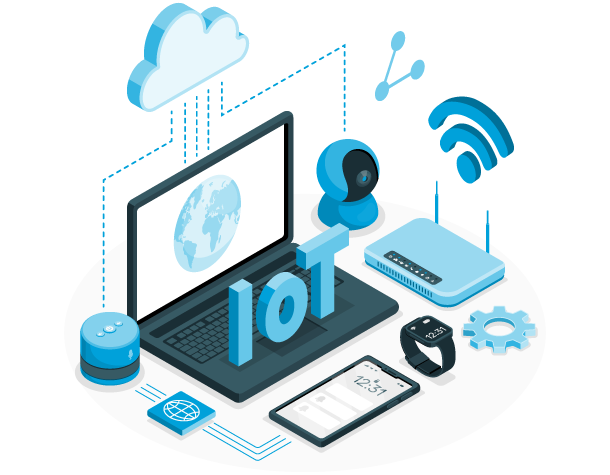
The leading verticals with demand for iot solutions are experiencing unprecedented growth as organizations across industries recognize the transformative potential of connected technologies for operational optimization, customer experience enhancement, and competitive differentiation. Internet of Things solutions encompass a comprehensive ecosystem of sensors, connectivity infrastructure, platforms, analytics, and applications that enable physical assets to communicate, share data, and respond intelligently to environmental conditions and operational requirements. The convergence of affordable sensor technology, ubiquitous connectivity, cloud computing, and advanced analytics has accelerated IoT adoption beyond early experimental deployments into mission-critical production environments across diverse sectors. Organizations increasingly view IoT not as optional technology enhancement but as essential infrastructure for survival and success in increasingly competitive and digitally transformed markets. The leading verticals with demand for iot solutions are is projected to grow USD 2426.55 Billion by 2035, exhibiting a CAGR of 15.01% during the forecast period 2025-2035. This remarkable growth trajectory reflects the fundamental value IoT delivers through improved visibility, predictive capabilities, automation, and enhanced decision-making across organizational operations. The transformation driven by Internet of Things solutions represents a technological revolution reshaping how industries operate, compete, and create value for customers and stakeholders.
Manufacturing represents one of the most mature and extensive verticals for IoT solution deployment, with connected technologies enabling smart factory transformations that improve productivity, quality, and flexibility across production operations worldwide. Industrial IoT sensors monitor equipment conditions including vibration, temperature, pressure, and power consumption, providing continuous visibility into asset health and performance status. Predictive maintenance applications analyze sensor data to anticipate equipment failures before they occur, enabling proactive intervention that prevents costly unplanned downtime and extends asset lifespans. Production optimization leverages real-time data from connected manufacturing systems to identify bottlenecks, reduce waste, and improve throughput across complex multi-stage production processes. Quality improvement initiatives use IoT-enabled inspection and process monitoring to identify defect sources and optimize parameters for consistent output quality. Supply chain visibility extends IoT connectivity to track materials, components, and finished goods throughout manufacturing and distribution networks. Energy management applications monitor and optimize utility consumption across manufacturing facilities, reducing costs and environmental impacts. These manufacturing applications demonstrate the substantial value IoT delivers through operational intelligence and automation.
Healthcare represents a rapidly growing vertical for IoT solutions, with connected medical devices, remote patient monitoring, and smart facility management transforming care delivery, patient outcomes, and operational efficiency across the healthcare continuum. Remote patient monitoring enables continuous tracking of vital signs, medication adherence, and health indicators for patients outside clinical settings, supporting chronic disease management and post-acute care programs. Connected medical devices transmit operational data and patient information to clinical systems, enabling comprehensive visibility and proactive maintenance of critical healthcare equipment. Smart hospital applications optimize building systems, asset tracking, patient flow, and resource utilization through connected infrastructure and real-time analytics. Wearable health devices enable consumer health monitoring, fitness tracking, and early warning detection that support preventive care and wellness initiatives. Clinical workflow optimization uses location tracking and connected systems to improve staff efficiency and patient experience. Cold chain monitoring ensures appropriate temperature maintenance for vaccines, blood products, and other temperature-sensitive medical materials. These healthcare applications improve patient outcomes while addressing cost and access challenges facing healthcare systems globally.
Additional high-demand verticals for IoT solutions include smart cities, energy and utilities, transportation and logistics, retail, and agriculture, each leveraging connected technologies to address sector-specific challenges and opportunities. Smart city applications encompass traffic management, public safety, environmental monitoring, and citizen services that improve urban quality of life while enabling efficient resource allocation. Energy utilities deploy IoT for grid optimization, renewable integration, predictive maintenance, and demand management across generation, transmission, and distribution infrastructure. Transportation and logistics leverage IoT for fleet management, asset tracking, route optimization, and cold chain monitoring that improve efficiency and service levels. Retail applications include inventory management, customer experience enhancement, supply chain visibility, and store operations optimization through connected technologies. Agricultural IoT enables precision farming, irrigation optimization, livestock monitoring, and supply chain traceability that improve yields while reducing resource consumption. These diverse vertical applications demonstrate the universal value of IoT solutions across industries, driving sustained market growth as organizations pursue digital transformation initiatives enabled by connected technologies.
Top Trending Reports -

 English
 Arabic
 French
 Spanish
 Portuguese
 Deutsch
 Turkish
 Dutch
Dutch
 Italiano
 Romaian
 Portuguese (Brazil)
 Tiếng Việt